MUSICAL JIGSAWS


There are many concepts and ways to look at the process of learning a instrument beyond the mechanics of music theory.
From the aural, by training the ear to transcribe sounds from recorded music so as to build up ear training and the visual, by studying other musicians performing and watching their hand positions and movements.
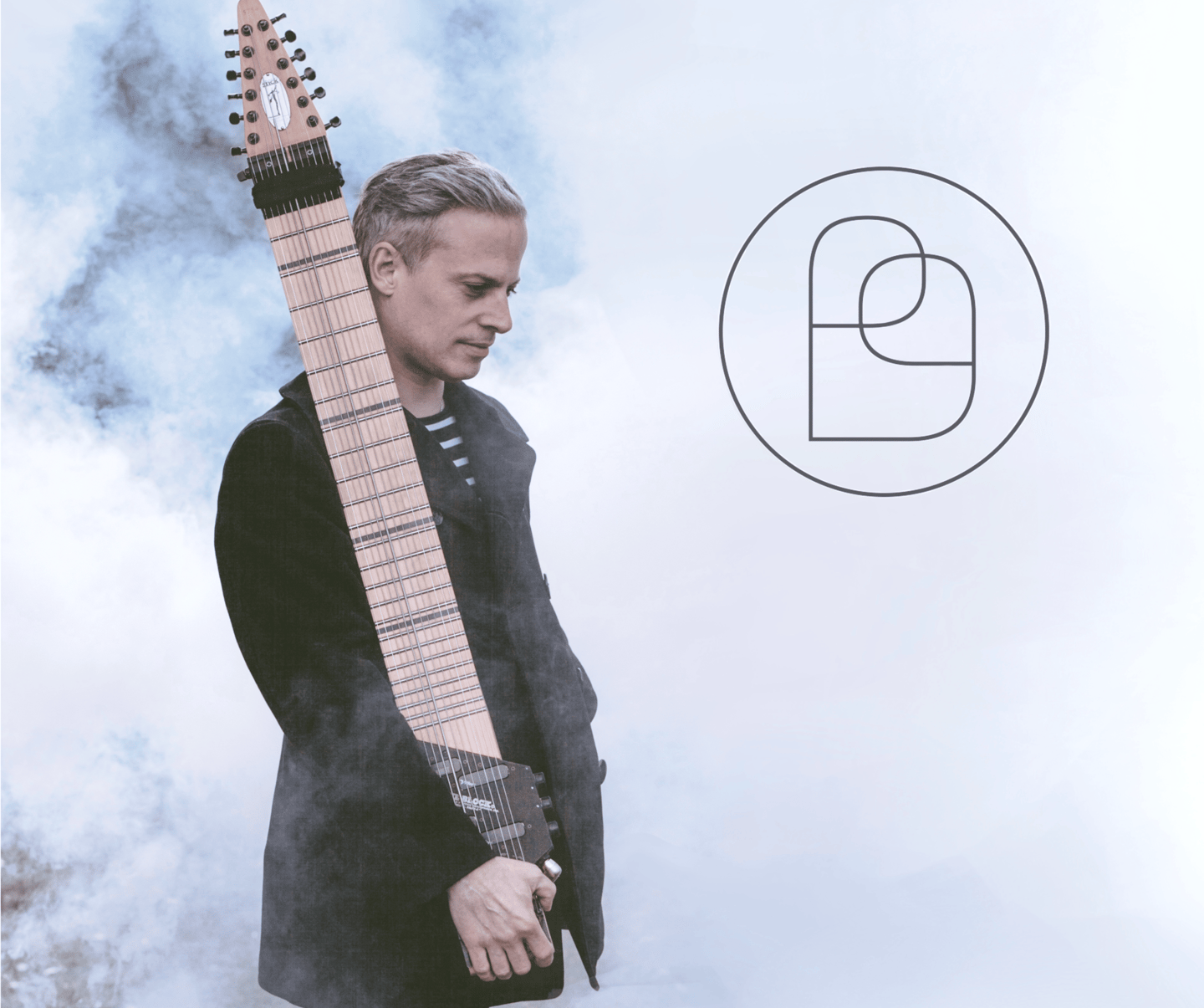
All this information can give a wealth of possibilities but must ultimately be processed into a logical practice routine so as not to fall into bad habits and musical ruts. As the Stick is still an instrument in its infancy,an open mind and a strong sense of organisation of all these pieces seems to be discipline in itself.
As a Pianist learns to cover this theory with both of their hands, a Stick player also has to extend and visualise the fretboard beyond the point of bass and treble, and to unite the two hands into making music. This is where an understanding of musical theory can help a musician to break the old and to create something new,to extend and build upon what they already know. Visualisation is the secret of piecing together all of this information to give the musician a cohesive and clear understanding of the fundamentals of making music.

A diagram of the the fretboard of any chosen scale, can help the eyes to learn to search out relationships of intervals and shapes and to facilitate finding chords modally. It also helps to separate the root note from the other degrees so there is a focal point and stops the diagram turning into a mess of confusion.From this point onwards, diatonic chords can be constructed from the parent scale, as well as argeggios so that a clear relationship can be found,uniting all of the information into a family unit.
Take for example a simple major scale.Built from the root note by steps of either a tone (2 frets) or a semi-tone(1 fret) the formula will be tone…tone…semi-tone...tone...tone...tone…semi-tone.

Starting from C these notes will be C-D-E-F-G-A-B-C.
Using these notes we can fill out a diagram of the fretboard with every possible position of the C Major scale making sure that the root note (C) is circled twice.If this is done using a 10 or 12 stringed diagram of a Chapman Stick tuned in fourths(treble) and fifths(bass) then one can see that the relationship of notes stay the same across the whole instrument with the only difference being that the direction of pitch is reversed from one side to the other. If a triad was played on the treble side then the same triad on the bass side will look the same but will be inverted so that the lowest note of the treble triad will now be the highest note of the bass triad and visa versa but with no change of the actual note names.

From this diagram we can create a system of finding every permutation of a C major chord by numbering the C major scale from 1 to 7(C is 1, D is 2, E is 3 etc) and using the formula of 1,3,5 to construct the C major chord (C,E,G).
From this point we can build a C major chord starting from each point of the triad. Starting at 1 (1,3,5=C,E,G). Starting at 3 (3,5,1=E,G,C) and starting at 5 (5,1,3=G,C,E). Once we have built these 3 sets (invertions) of a C major chord we can now stack up each triad (a 3 note chord) over the fretboard from the low strings to the highest vertically in every position and have a way of organising these parts so that they all fit together as one unit.

We can now build chords diatonically from each point of the scale by starting on each degree of the C major scale , a set of new triads derived from the original scale. A similar concept as splitting light into its component colours. If we start on the 2nd note and use the same theory we find a D minor chord (D,F,A), an E minor chord (E,G,B) from the 3rd note, an F major chord from the 4th, a G major chord from the 5th, an A minor chord from the 6th and a B diminished from the 7th. No other notes are used other than the original notes of C major to create all of the separate chords for this example so that we now have built a chord for each note of the scale. C major, D minor, E minor, F major, G major, A minor and B diminished. From this harmonisation of any given scale we can create a set of diatonic chords from each note and start to understand their relationship and function as to creating music.

Of course this is only the start of understanding the idea of harmonisation and musical theory and how to apply it to the Chapman Stick (or any instrument) and there are many sources of information that are available for music theory and education and the Stick is a perfect instrument for applying these ideas and concepts.A vast pool for the application of shapes, movement and ideas.

Above all, music is more than a mere numbers game and theory should only be used as one part of the jigsaw, a way of understanding the instrument and its many possibilities so that we can forget everything we know and just create.

Good luck and best wishes.

Pascal Glanville October 2004


Writing about music is like dancing about architecture. Quentin Crisp